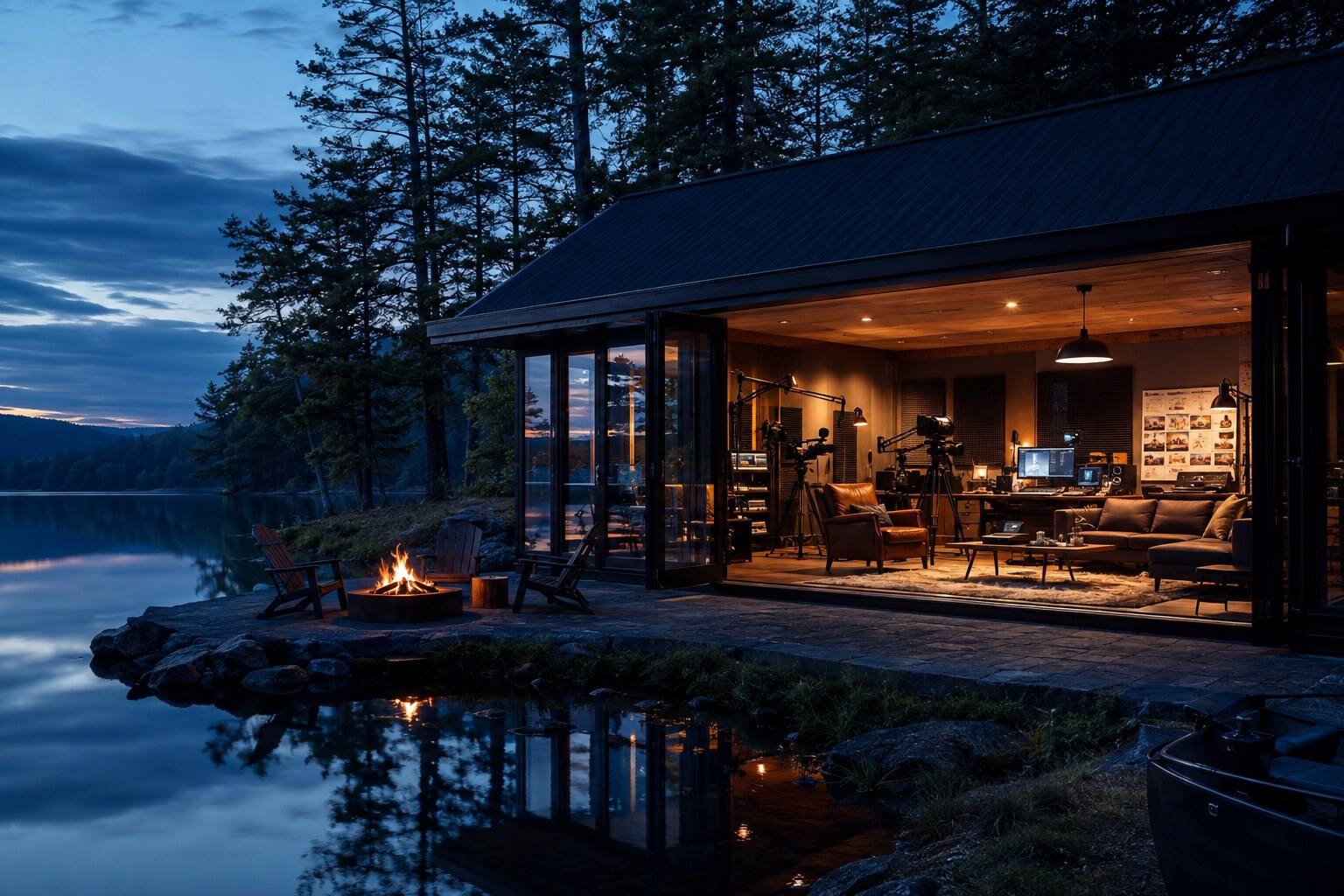
A Media Retreats residency is structured as a temporary commitment to one meaningful body of work. It can last a long weekend, a focused week, or a longer period for projects that require repeated cycles of making, reviewing, and revising. The residency is not awarded according to celebrity, institutional status, or the size of an audience. What matters is the clarity of the proposed work, the seriousness of the questions behind it, and the likelihood that uninterrupted time will make a real difference.
Applications are intentionally practical. Prospective guests describe what they are making, what currently blocks progress, and what they hope to complete or understand during the stay. A finished masterpiece is not required. In fact, the retreat is often most valuable at uncertain stages: when a documentary has too many possible stories, when a manuscript has a strong voice but no shape, or when a media project needs to move from research into production. Applicants also explain which facilities, forms of feedback, and working conditions would help.
Once accepted, each resident receives a planning conversation before arrival. Together, the guest and retreat coordinator identify a realistic focus. The plan includes several milestones, but it also protects room for discovery. A resident might aim to assemble a twenty-minute rough cut, record three prototype episodes, revise two chapters, or produce a coherent edit from a large photographic archive. These targets create direction without pretending that creative work behaves like a factory line.
During the residency, participation in group activity remains optional but encouraged. Shared breakfasts and evening salons give residents a dependable way to reconnect after solitary work. Technical clinics address specific needs without turning the week into a class. Peer circles are small, time-limited, and guided by the questions brought by the artist. Nobody is required to share material before it is ready, yet the culture favors thoughtful exchange over private perfectionism.
Departure is treated as part of the process rather than an abrupt ending. Residents create a brief continuation plan before leaving, naming the next three actions, the people who may need to see the work, and the conditions required to maintain momentum. Some projects return for a later residency; others leave ready for publication, production, funding, or a new round of research. The success of a residency is not measured only by completed pages or exported files. It is measured by whether the work has gained direction, substance, and a future that feels possible.