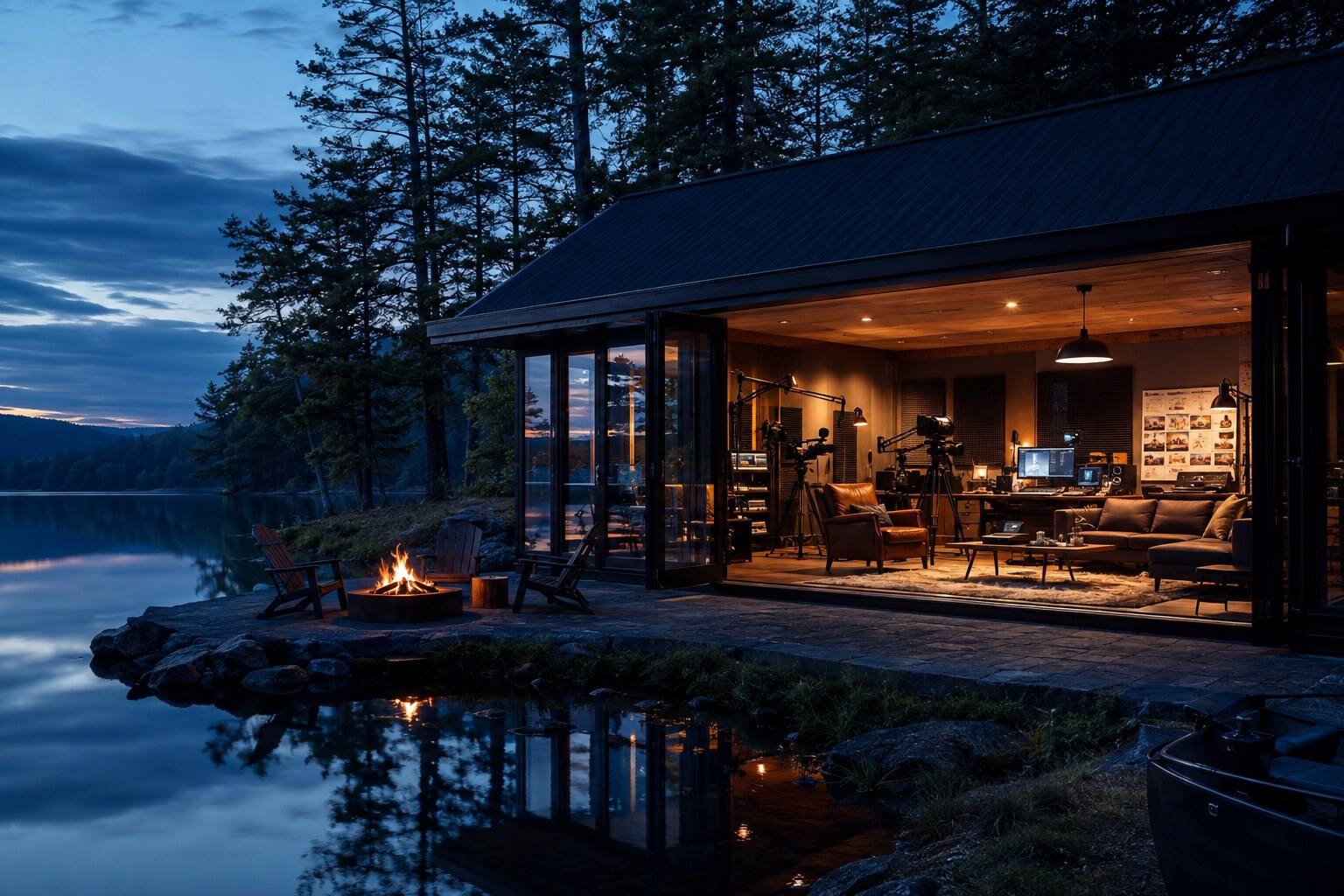
The philosophy behind Media Retreats begins with a suspicion about modern creative culture: too much energy is spent displaying motion, while too little is protected for actual progress. Busy schedules can look impressive even when a project remains untouched. Endless communication can create the feeling of collaboration without producing a meaningful decision. A retreat should interrupt that pattern. It should make room for deeper work while refusing the fantasy that inspiration appears only when every difficulty disappears.
For that reason, the retreat is designed around productive contrast. There are generous spaces, but also deadlines chosen by the guest. There is privacy, but also a small community close enough to challenge a weak assumption. There is beautiful scenery, but the environment never asks to become the subject of every project. Comfort matters because discomfort drains attention, yet the rooms avoid excessive luxury that might turn the stay into passive consumption. Everything aims toward alertness, clarity, and enough ease to keep working.
Guests are encouraged to arrive with a question rather than a grand declaration. A filmmaker might ask whether a sequence can carry emotion without narration. A writer might test whether a character’s silence is compelling or merely vague. A producer may need to discover what a series is truly about before recording another episode. These questions are specific enough to guide work and open enough to allow surprise. The retreat team helps each guest build a practical plan around them, including focused sessions, review points, and intentional breaks.
Feedback follows the same philosophy. It should be precise, respectful, and useful. Participants are not asked to perform expertise or compete for attention. They describe what they noticed, where they became curious, where energy dropped, and which choices felt most alive. The artist remains responsible for deciding what to keep. This protects experimentation from consensus while preventing solitude from becoming an excuse to avoid difficult reactions.
The wider hope is that guests leave with habits that survive beyond the retreat. A week of focus is valuable, but a new way of arranging a morning, framing a question, or asking for feedback can influence years of work. Media Retreats is not presented as a magical reset. It is a carefully built interval in which better working conditions become visible. Once a person has experienced those conditions, they can recognize which parts are essential and recreate them, in smaller forms, wherever their ordinary life continues.